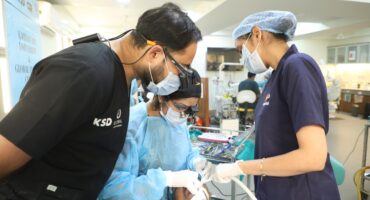
By Dr Brijesh Mandli – Lead Mentor, Global Implant Centre
Implant dentistry is often associated with surgical techniques, implant systems and digital planning tools. However, one of the most important skills for any developing implant dentist is case selection in implant dentistry.
Choosing the right cases early in your implant journey significantly reduces complications and builds clinical confidence. Many implant complications occur not because the dentist lacks surgical ability, but because the case complexity exceeded the clinician’s experience level.
Dentists who want to develop surgical confidence often begin by exploring implant training programmes that combine theory with hands-on experience and mentorship.
In this article, I will share a practical framework that helps dentists determine which implant cases are appropriate to treat, which cases should be delayed, and which may be better referred to more experienced clinicians.
Early implant cases play a major role in shaping a dentist’s confidence. Predictable cases build clinical experience and trust in the treatment process, while poorly selected cases can lead to avoidable complications.
Careful case selection helps dentists:
- achieve predictable implant outcomes
- reduce surgical and prosthetic complications
- build clinical confidence
- progress gradually toward more complex procedures
Many dentists improve this skill through hands-on implant training, where treatment planning and case discussion are integrated with clinical mentorship.
Strong treatment planning in implant dentistry helps clinicians assess complexity and reduce complications.
Dentists starting their implant journey should focus on simple, predictable cases.
Typical beginner cases include:
- single posterior tooth replacement
- healed extraction sites
- sufficient bone height and width
- patients with good oral hygiene
- non-smokers
- stable occlusion
These cases allow clinicians to develop essential skills such as flap design, osteotomy preparation, implant positioning and suturing techniques.
As experience grows, dentists may gradually progress to moderately complex cases.
Examples include:
- immediate implant placement
- multiple adjacent implants
- aesthetic zone implants
- cases requiring minor bone grafting
Digital planning tools have significantly improved predictability in these cases. Modern digital workflow in implant dentistry allows clinicians to visualise implant placement and prosthetic outcomes before surgery.
Some implant cases require advanced training or mentorship.
Examples include:
- full-arch implant rehabilitation
- severe bone deficiency
- sinus augmentation procedures
- patients with heavy bruxism
- medically compromised patients
Procedures such as full-arch implant treatment often involve immediate loading protocols and complex prosthetic planning, making them more suitable for experienced implant clinicians.
Successful implant treatment depends not only on surgical skill but also on patient behaviour and medical history.
Important factors to evaluate include:
- oral hygiene compliance
- smoking habits
- systemic health conditions
- willingness to attend follow-up visits
- realistic expectations about treatment outcomes
Patients with strong oral hygiene and long-term compliance generally achieve better implant success rates.
Modern implant dentistry relies heavily on digital diagnostics.
CBCT imaging allows clinicians to:
- evaluate bone density and volume
- identify anatomical limitations
- plan implant angulation
- determine the need for guided surgery
Digital planning software improves treatment predictability and helps clinicians identify potential challenges before surgery.
Dentists can use the following structured approach when evaluating implant cases.
1 Assess patient health
Review systemic conditions, medications and smoking history.
2 Evaluate bone availability
CBCT imaging helps determine bone height, width and density.
3 Analyse occlusion
Identify parafunctional habits such as bruxism.
4 Assess aesthetic expectations
Anterior implant cases require more advanced planning.
5 Evaluate clinician experience
Match case complexity with your current level of training.
Case Type | Difficulty | Recommended Experience |
Single posterior implant | Low | Beginner |
Immediate implant | Moderate | Intermediate |
Multiple implants | Moderate | Intermediate |
Full-arch implant treatment | High | Advanced |
During implant training programmes at the Global Implant Centre , dentists often discover that many complications arise from poor case selection rather than surgical technique.
When clinicians learn to evaluate CBCT scans, patient risk factors and prosthetic planning before surgery, implant outcomes become significantly more predictable.
Developing this clinical judgement early in a dentist’s implant career improves confidence and reduces complications.
Case selection in implant dentistry is the foundation of successful implant treatment. By choosing appropriate cases and progressing gradually, dentists can develop their implant skills while maintaining predictable outcomes for patients.
Effective treatment planning also involves clear communication with patients, particularly when discussing risks, costs and expectations before proceeding with implant treatment.
With the support of structured mentorship, digital planning tools and continued education, clinicians can safely expand into more advanced implant procedures over time.