By Dr Brijesh Mandli – Lead Mentor, Global Implant Centre
While lecture-based CPD courses in implant dentistry provide valuable foundational knowledge, the gap between theory and practice becomes clear when dentists attempt live surgeries. Implant dentistry requires tactile, visual, and instinctive skills that only hands-on training can offer. The ability to apply knowledge in real-world settings, especially for complex procedures like full-arch restoration, is crucial for gaining confidence and competence.
In this article, I will share my observations as a clinician and mentor, highlighting why hands-on training is essential for general dentists seeking to expand their implant skills. I hope this will help you make an informed decision before spending thousands on a course that may not deliver the practical experience or expertise you truly need.
Lecture-based continuing professional development (CPD) certainly has its place. It introduces theoretical frameworks, familiarises dentists with terminology, and often provides an overview of available implant systems. For many dentists, these courses represent the first step in understanding the pathway to becoming an implant dentist in Australia.I have attended excellent conferences myself, filled with engaging speakers, clinical photographs, and videos of complex cases that inspire us all.
However, the limitation of these events lies in their distance from reality. You may learn about sinus augmentation or guided surgery in a lecture hall, but the sterile predictability of slides cannot simulate a bleeding site or a trembling patient. Real surgery involves variables – patient anxiety, soft-tissue quality, and unexpected anatomical anomalies, that no PowerPoint presentation can prepare you for.
Most CPD courses finish with an evaluation form and a certificate of attendance. The certificate looks impressive in a frame, but it seldom changes how confidently a dentist handles instruments. Without live-patient experience, the learning remains theoretical.
When dentists attend our Fellowship in Implantologyat the Global Implant Centre, the transformation usually begins within the first clinical session. The initial hesitation is almost universal. The first time a participant reflects a flap or positions an implant under supervision, the tension is palpable.
Then, as the procedure progresses, something remarkable happens. Confidence replaces fear. The dentist begins to understand tactile feedback, the vibration of the drill, the resistance of dense bone, and the delicate control required during osteotomy. Under direct mentorship, small corrections are made instantly, preventing mistakes and reinforcing best practices.
Hands-on training is not merely about repetition. It is about observation, adaptation, and guided reflection. Each case provides lessons that no lecture could ever convey:
- How to manage a narrow ridge without panic.
- How to maintain visual clarity when bleeding obscures landmarks.
- How to communicate calmly with a nervous patient mid-procedure.
That emotional and sensory learning is what turns theoretical knowledge into clinical competence.
In implant dentistry, information is abundant. What is scarce is mentorship. Anyone can read implant manuals or watch surgical videos online, but only a mentor can correct your hand position, guide your force, or advise when to stop and reassess.
During live-patient sessions, I often share minor but crucial adjustments: changing angulation by a few degrees, choosing a shorter drill sequence, or managing soft-tissue reflection to preserve keratinised gingiva. These subtle interventions make a profound difference to long-term success rates.
Mentorship also provides psychological assurance. Knowing that an experienced clinician is beside you allows you to focus fully on precision instead of fear. Over time, reliance on supervision decreases and self-trust grows – the very essence of professional maturity.
Let us look at the practical distinctions between lecture-based CPD and hands-on clinical training in real terms.
The key takeaway is that hands-on training replaces passive observation with active involvement. Each implant placed under mentorship adds tangible skill – a foundation that cannot be replicated in a classroom
Every year, I meet dentists who enrol in the least-expensive implant course available, hoping to gain quick competency. A few months later, many confess disappointment. They return with questions the course never answered: How do I handle a perforated sinus? What if the implant feels unstable? What do I say when a patient asks about immediate loading? These situations highlight the importance of learning how to recognise and manage complications in implant dentistry before treating patients independently.
| Learning dimension | Lecture-based CPD | Hands-on implant training |
| Format | Classroom or online lectures | Live surgeries under supervision |
| Experience type | Observational | Experiential and tactile |
| Skills developed | Theoretical understanding | Surgical, prosthetic and decision-making |
| Feedback | Generic, end-of-session | Real-time mentor correction |
| Emotional learning | Minimal | Builds confidence through repetition |
| Patient management | Not addressed | Practised directly with real cases |
| Outcome | Certificate of attendance | Documented clinical competence |
Cheap courses often compress complex subjects into short timelines, leaving no room for reflection or practice. The result is partial knowledge and rising anxiety. In contrast, comprehensive fellowship programmes may appear costly initially, but they offer structure, repetition, and supervision that prevent expensive clinical mistakes later.
I frequently remind colleagues: “It is better to invest in learning before you pick up a scalpel than to pay for complications afterwards.”
In our Perth facility, every participant performs a series of progressively challenging implant cases. The early sessions start with single implants in straightforward ridges. As confidence develops, we move to multiple units, grafting, and eventually full-arch rehabilitation.
By working with actual patients, participants see the full journey – from consultation to final prosthesis. They learn to assess CBCT scans, design surgical guides, plan prosthetic space, and restore occlusion. The live environment demands critical thinking: if bone density varies from the plan, adjustments must be made immediately.
Such experiences create durable neural pathways. A dentist who has placed an implant under real-world pressure once can repeat the process independently later with far less stress. That is why our alumni frequently report a complete shift in mindset after completing their fellowship or residency.
Beyond technical ability lies psychological resilience. Performing surgery requires calm focus, even when circumstances change unexpectedly. During our training sessions, I often observe how dentists evolve emotionally.
Initially, there is anxiety about incision lines or flap tears. Gradually, through repetition and mentorship, that anxiety transforms into composure. Participants begin to speak reassuringly to their patients while maintaining surgical accuracy. This combination of empathy and precision defines a mature implant dentist.
No lecture can replicate that growth. Emotional intelligence develops only through experience and guided reflection.
If you are considering enrolling in implant training, here are a few criteria I recommend evaluating before committing your time and money:
- Live-patient requirement – Verify that you will personally perform procedures, not merely observe.
- Mentor-to-student ratio – Small cohorts allow genuine supervision and feedback.
- Case diversity – Seek programmes that expose you to different bone types, prosthetic designs, and loading protocols.
- Curriculum depth – A complete course should include surgical, prosthetic, and digital components.
- Accreditation and recognition – Look for affiliations with bodies such as the International Congress of Oral Implantologists (ICOI) or the Australian Society of Implant Dentistry (ASID).
- Post-course support – Ask whether mentorship continues after the certificate is issued.
In my opinion, training without ongoing guidance is incomplete. Implant dentistry evolves rapidly; continued mentorship ensures your techniques remain current and safe.
Another aspect often overlooked in theory-only courses is digital workflow. The shift towards guided surgery, intraoral scanning, and CAD/CAM prosthetics has revolutionised precision and efficiency.
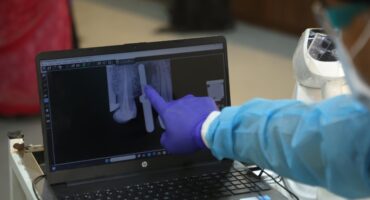
In our advanced modules, participants plan each case digitally before entering surgery. They learn to merge CBCT and optical scan data, design surgical guides, and understand how prosthetic limitations influence implant placement. This holistic approach integrates surgical and restorative thinking from day one.
Without practical digital exposure, dentists risk falling behind as technology becomes standard practice across Australia.
Let us address the most common question, the financial side. A lecture-based CPD weekend might cost between AUD 3,000 and 5,000, which appears affordable. A full hands-on fellowship programme may cost between AUD 10,000 and 20,000, depending on its scope.
At first glance, the price difference seems significant. Yet, when you calculate long-term returns, the equation changes completely. A single successfully completed implant case can generate several thousand dollars in treatment revenue. A full-arch rehabilitation may bring in tens of thousands.
Many of our graduates recover their tuition fees within their first few independent cases. More importantly, they gain the competence to deliver predictable results and avoid costly complications. That kind of assurance is priceless.
Even after completing a fellowship, the journey does not end. True mastery in implant dentistry comes from continuous practice supported by mentorship. That is why at the Global Implant Centre, we maintain open channels for alumni to discuss cases, share radiographs and seek guidance whenever uncertainty arises.
Some of our most gratifying moments occur months later when a graduate sends a photograph of a perfectly integrated implant or a smiling full-arch patient. Those successes reaffirm why proper education matters.
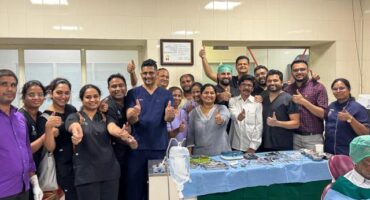
When a dentist performs their first live surgery successfully, the sense of accomplishment is palpable. I have seen participants step back from the chair, eyes bright with disbelief, whispering, “I actually did it.”
That moment of transformation is what every educator hopes to witness, the instant theoretical understanding becomes embodied skill. It is something a lecture can never replicate.
For many, that first experience ignites a lifelong passion for surgical dentistry. They go on to build thriving implant practices, mentor others, and elevate standards across the profession.
Before you sign up for your next CPD course, ask yourself:
- Do I want information or ability?
- Do I prefer to listen, or am I ready to act?
- Am I seeking a certificate, or genuine competence?
If your goal is to perform implant procedures confidently and safely, choose a course that places you in direct contact with patients under experienced supervision. Anything less will leave you wanting more.
Implant dentistry is one of the most rewarding paths in modern dental practice, but it demands more than theoretical knowledge. You need guided, hands-on experience to truly master the art and science behind it.
Lecture-based CPD can inspire you; live-patient training will transform you. When combined with structured mentorship, reflection, and digital integration, it builds lasting competence that benefits both you and your patients.
If you are ready to bridge the gap between knowing and doing, I invite you to explore the Fellowship in Implantology or Clinical Residency at the Global Implant Centre in Perth. It might be the step that changes not only your career but also your confidence in surgery forever.