By Dr Brijesh Mandli – Lead Mentor, Global Implant Centre
Successful implant dentistry begins long before the surgical procedure itself. One of the most important factors influencing implant outcomes is careful treatment planning. In many cases, complications occur not because of poor surgical technique, but because critical planning considerations were missed early in the process.
For developing implant dentists, structured treatment planning creates predictability, improves communication and reduces unnecessary complications. It allows clinicians to evaluate patient suitability, identify risks and determine the most appropriate restorative and surgical approach before treatment begins.
Dentists who want to improve their confidence in planning and execution often benefit from implant training programmes that combine digital workflow, case discussion and supervised clinical experience.
In this article, I will outline a practical step-by-step framework for treatment planning in implant dentistry and discuss the key factors clinicians should evaluate before placing implants.
Implant dentistry is prosthetically driven. This means the ideal restorative outcome should guide implant positioning, not the other way around.
Careful treatment planning helps clinicians:
- Improve implant positioning
- Reduce surgical complications
- Achieve better aesthetic outcomes
- Minimise prosthetic problems
- Improve patient communication and consent
Many clinicians develop this skill through hands-on implant training, where real patient treatment planning is integrated into clinical learning.
Before discussing implant placement, clinicians should evaluate:
- Systemic health conditions
- Smoking history
- Medications affecting healing
- Periodontal history
- Oral hygiene status
Conditions such as uncontrolled diabetes or heavy smoking may increase the risk of implant complications and influence treatment decisions.
Patients should also be assessed for motivation and long-term maintenance compliance.
A successful implant outcome is not only clinical but also psychological.
Dentists should discuss:
- Treatment goals
- Aesthetic expectations
- Treatment timelines
- Financial considerations
- Long-term maintenance requirements
Clear communication is essential. Effective implant patient communication helps reduce misunderstandings and improves treatment acceptance.
The clinical examination should include assessment of:
- Soft tissue quality
- Keratinised tissue
- Occlusion
- Interarch space
- Adjacent teeth
- Smile line and aesthetics
Parafunctional habits such as bruxism should also be identified early because they influence prosthetic planning and long-term implant stability.
Modern implant dentistry relies heavily on digital diagnostics.
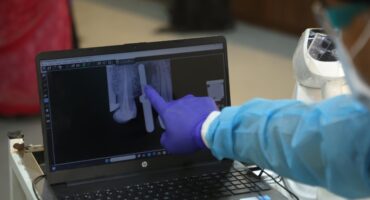
CBCT imaging allows clinicians to evaluate:
- Bone height and width
- Anatomical structures
- Bone density
- Implant angulation possibilities
A structured digital workflow in implant dentistry improves planning accuracy and allows clinicians to visualise restorative outcomes before surgery begins.
Digital planning software can also assist with guided surgery and implant positioning.
Not every implant case should be treated immediately.
Dentists should evaluate whether the case is:
- Low complexity
- Moderate complexity
- Advanced complexity
This process is closely related to case selection in implant dentistry, particularly for developing clinicians.
Complex procedures such as full-arch rehabilitation or advanced grafting may require mentorship or referral.
One of the most important principles in implant dentistry is beginning with the end in mind.
The restorative plan should determine:
- Implant position
- Angulation
- Depth
- Prosthetic space requirements
This prosthetically driven approach significantly improves long-term success and reduces restorative complications.
Before surgery, clinicians should identify factors that may increase complications.
Examples include:
- Limited bone volume
- Parafunctional habits
- Poor oral hygiene
- Smoking
- Aesthetic zone challenges
Understanding potential implant complications before treatment allows clinicians to prepare appropriate management strategies.
Patients should understand the full treatment sequence, including:
- Implant placement
- Healing periods
- Provisional restoration phase
- Final prosthesis delivery
- Maintenance reviews
This improves patient understanding and helps manage expectations realistically.
Dentists can use the following framework when planning implant treatment.
1. Assess patient suitability
Review medical history, hygiene and compliance.
2. Evaluate anatomy
Use CBCT imaging to assess bone and anatomical limitations.
3. Determine restorative goals
Plan the final prosthetic outcome first.
4. Assess complexity
Match the case difficulty with clinician experience.
5. Identify risks
Evaluate potential surgical and restorative complications.
6. Confirm patient understanding
Discuss expectations, risks and timelines clearly.
| Case Type |
Planning Difficulty |
Recommended Experience |
| Single posterior implant |
Low |
Beginner |
| Immediate implant |
Moderate |
Intermediate |
| Multiple implants |
Moderate |
Intermediate |
| Full-arch implant treatment |
High |
Advanced |
During implant training programmes at the Global Implant Centre, many dentists discover that strong treatment planning skills significantly reduce surgical stress and improve implant predictability.
Clinicians who learn to combine CBCT analysis, restorative planning and digital workflow before surgery often progress more confidently into advanced implant procedures.
Treatment planning in implant dentistry is the foundation of predictable implant outcomes. Careful assessment of patient factors, anatomy, restorative goals and case complexity helps clinicians improve both surgical accuracy and long-term success.
With structured mentorship, digital planning tools and continued clinical experience, dentists can develop a systematic approach to implant treatment planning that improves confidence and patient outcomes over time.